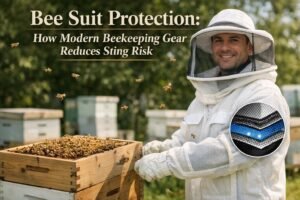
Bee Suit Protection: How Modern Beekeeping Gear Reduces Sting Risk

Beekeeping is a rewarding hobby and a vital agricultural practice, but it comes with inherent risks — chief among them is the bee sting. Whether you’re a beginner or a professional, wearing a proper bee suit is essential to ensure safety in the apiary. But the question often arises: can bees sting through a bee suit?
In this guide, we’ll explore how bee suits work, common vulnerabilities, and best practices to keep you protected. All recommendations are based on modern beekeeping standards and practices, ensuring that your work in the hive is safe, efficient, and comfortable. goldenhivegears provides professional-grade bee suits designed for safety, comfort, and durability, giving beekeepers the confidence they need for every hive inspection.
Bee stings are more than a minor nuisance — for some individuals, they can be dangerous due to allergies or repeated exposure. Even for those without allergies, frequent stings can cause pain, swelling, and fatigue, making proper protective gear essential.
A bee suit is your first line of defense. Its purpose is to create a barrier between you and the bee’s stinger while allowing mobility and ventilation. Wearing a suit gives you confidence to manage hives effectively and reduces the risk of accidents.
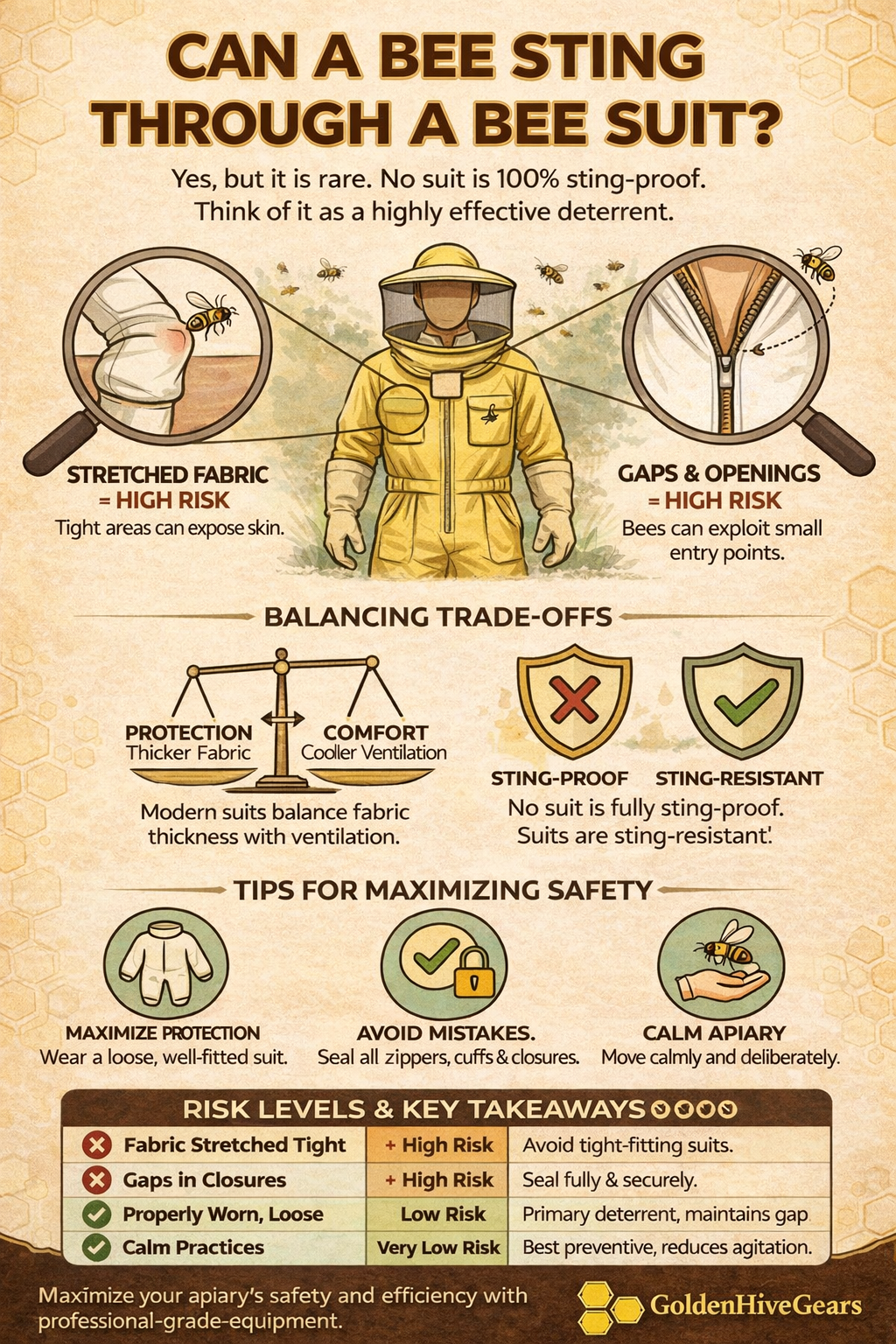
The short answer is: yes, under certain conditions, bees can sting through a bee suit. However, this is rare if you are wearing a properly fitted, high-quality suit.
Key factors that affect protection:
It’s important to understand that no bee suit is 100% sting-proof. The goal is to make stings extremely unlikely rather than impossible.
Even the best bee suit can have vulnerabilities. Identifying these weak points is essential for maximizing protection.
Bee suits are designed with a delicate balance between protection and comfort.
Choosing the right suit depends on your environment, hive activity, and personal comfort preferences.
Even the best bee suit cannot compensate for unsafe handling. Your behavior around bees is a critical protective factor.
A properly worn suit, combined with calm behavior, significantly minimizes sting risk.
Selecting the right suit is vital for both comfort and protection. Here’s what to look for:
Proper maintenance ensures that your suit remains protective for years.
A well-maintained suit keeps you safe and extends its lifespan.
Q1: Can bees sting through a veil?
A: If the veil is damaged, improperly fitted, or has gaps, bees may be able to reach exposed skin. Always secure and inspect the veil.
Q2: Are sting-resistant suits enough for commercial hives?
A: Yes, when combined with proper handling and calm movements. Professional-grade suits from goldenhivegears offer additional durability and coverage for heavy-duty use.
Q3: How often should I replace my bee suit?
A: Replace it when fabric thins, elastic loses elasticity, zippers break, or mesh panels tear. Regular inspection is key.
Q4: Do children need the same level of protection?
A: Yes. Child-sized professional-grade suits are available and ensure safety during educational or hobby beekeeping activities.
Q5: How do I maintain the air gap in my suit?
A: Always wear a slightly baggy suit, avoid tight clothing underneath, and double-check cuffs, ankles, and zippers for proper closure.
Q6: How important is a bee veil, and can it prevent stings?
A properly designed and fitted bee veil is critical for protecting your face and neck, the areas most vulnerable to stings. Even with a full bee suit, a loose, torn, or poorly secured veil can allow bees to reach your skin. Always check that the veil is securely attached, free of gaps, and properly fastened to the suit before each inspection. Using a high-quality veil reduces sting risk and enhances comfort during long hive work sessions.
While no bee suit is completely sting-proof, wearing the right gear dramatically reduces your risk. Combine a professional-grade, properly fitted suit from goldenhivegears with calm, deliberate hive handling to enjoy a safe and productive beekeeping experience. Equip yourself with trusted protective gear today — your safety and efficiency depend on it.