Bee Suit Protection: How Modern Beekeeping Gear Reduces Sting Risk

Bees are essential pollinators, responsible for supporting ecosystems and global food supplies. While they are famously drawn to bright colors like blue, yellow, and purple, many beekeepers wonder whether bees are attracted to white. This question is not just theoretical—bee behavior directly affects flower planting strategies, hive management, and the protective clothing beekeepers wear.
At Golden Hive Gears, we emphasize understanding bee behavior to optimize hive health, maximize honey production, and ensure safe, stress-free inspections.
Bees are generally more attracted to colors with high visibility in the UV spectrum, including blue and yellow. However, they do recognize and forage on white flowers with contrasting centers or UV-reflective patterns. Examples include daisies, chamomile, yarrow, and asters, where dark centers or nectar guides make flowers more noticeable to bees.
Even though white is less visually stimulating than UV-reflective colors, it still plays a vital role in nectar collection and colony nutrition, especially in urban or suburban apiaries where white blooms can stand out against lawns, buildings, and garden spaces.
Practical Tip: Plant clusters of white flowers near hive entrances to improve bee navigation and reduce stress during peak foraging times.
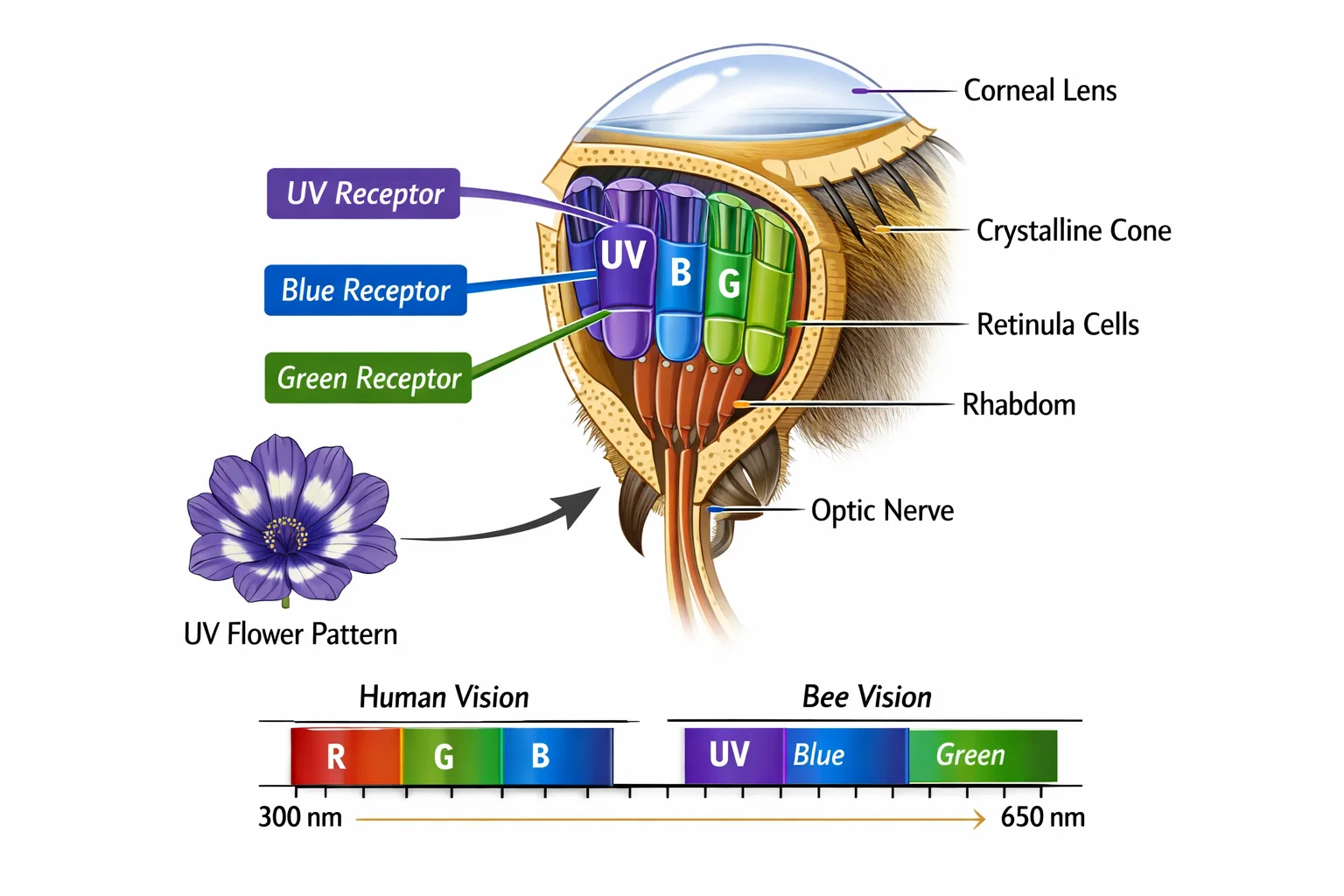
Bees have trichromatic vision, detecting UV, blue, and green wavelengths (approx. 300–650 nm). Humans, in contrast, see red, green, and blue. This explains why UV-reflecting patterns on white flowers appear as striking targets to bees, even when they seem plain to humans.
Key points:
Planting white flowers strategically for optimal bee foraging benefits both hive productivity and colony health. Some top picks include:
| Flower | Nectar Yield | Bloom Season | Hive Nutrition Impact |
| Daisies | Medium | Spring–Summer | Pollen & nectar, visual guidance |
| Chamomile | Medium | Late Spring | High nectar, calming aroma |
| Yarrow | High | Summer | Nectar and pollen support |
| Asters | Medium | Late Summer–Fall | Extended season forage |
White flowers with UV-contrasting centers attract bees more effectively. Staggering planting times ensures continuous year-round forage, supporting colony nutrition from early spring through fall.
Tip: Combine white flowers with colorful high-UV blooms like lavender, clover, or borage to optimize honey flow and brood health.
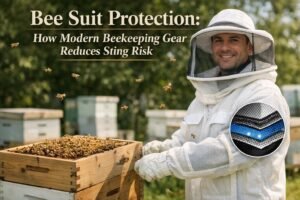
Beekeepers wear protective clothing—including jackets, pants, gloves, and veils—to reduce stings. White has scientific advantages:
Golden Hive Gears ventilated white suits enhance airflow and comfort, making them ideal for extended inspections and warm climates.
Combining white flowers and white suits can minimize stress for both bees and beekeepers:
This approach improves foraging efficiency and beekeeper safety, while supporting optimal hive nutrition.
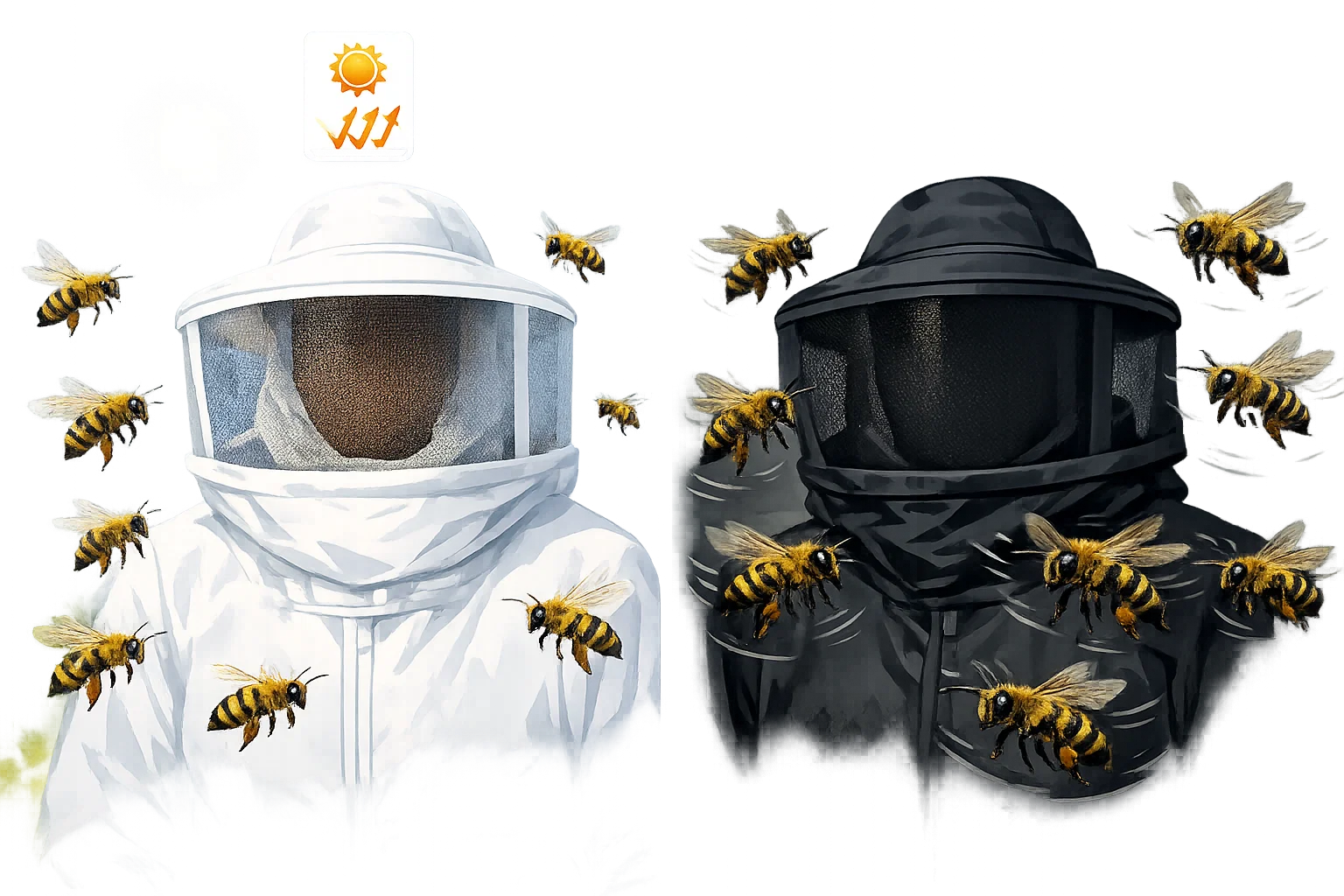
Q1: Can I safely wear black or dark-colored clothing while beekeeping?
A: No. Dark colors such as black or brown trigger defensive behavior in bees, increasing the likelihood of stings. White or light-colored clothing is preferred for safer hive inspections.
Q2: Do UV patterns on flowers really matter for bee foraging?
A: Yes. Bees are highly sensitive to UV-reflective patterns, which help them locate nectar efficiently. White flowers with UV-contrasting centers are particularly effective in guiding foragers.
Q3: Which white flowers are best for US beekeepers to plant?
A: Ideal choices include daisies, chamomile, asters, and yarrow. These flowers offer accessible nectar and pollen and bloom at different times of the year to support continuous forage.
Q4: Do white bee suits reduce heat stress during inspections?
A: Yes. White suits reflect sunlight, keeping beekeepers cooler, especially during summer hive inspections. This also helps reduce bee agitation.
Q5: Can urban or suburban bees thrive with white flowers?
A: Absolutely. White blooms planted in containers, rooftop gardens, or backyard clusters provide excellent forage even in limited spaces, supporting healthy colonies in urban settings.
Q6: Does bloom timing affect bee foraging success?
A: Yes. Staggering the planting of white and other nectar-rich flowers ensures bees have continuous forage throughout the spring, summer, and fall seasons.
Q7: Do ventilated bee suits improve comfort and handling?
A: Yes. Ventilated suits increase airflow, reduce body heat, and minimize beekeeper fatigue, which in turn lowers bee stress and makes inspections safer.
Q8: Can white flowers enhance honey yield?
A: Yes. By attracting more foragers efficiently, white flowers contribute to consistent nectar collection, supporting both brood development and honey storage.
Q9: Are white flowers less nutritious than colorful ones?
A: Not necessarily. Nectar and pollen content depends on the species and bloom health, not flower color. Many white flowers offer high-quality nutrition for bees.
Q10: How often should white bee suits be cleaned?
A: White suits should be washed after heavy inspections or if visibly soiled. Cleaning maintains UV reflectivity, reducing bee agitation and prolonging suit effectiveness.
Bees are attracted to white, especially when flowers feature UV-reflective or contrasting centers. Pairing white blooms with ventilated protective suits reduces stress for bees and keeps beekeepers safe.
From physiology and vision science to practical hive management and advanced planting strategies, understanding how color impacts bee behavior enhances hive productivity and inspection safety.
White is not just a color—it’s a strategic tool for modern beekeeping.