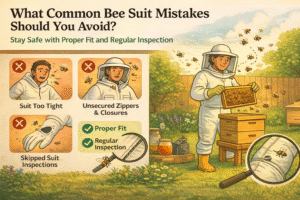
What Common Bee Suit Mistakes Should You Avoid? Stay Safe with Proper Fit and Regular Inspection

Beekeeping is both rewarding and demanding. Bees are essential to agriculture and ecosystems. However, they are also defensive insects that protect their colony when threatened. For this reason, proper protective clothing is not optional — it is essential.
Simply wearing a bee suit does not automatically guarantee safety.
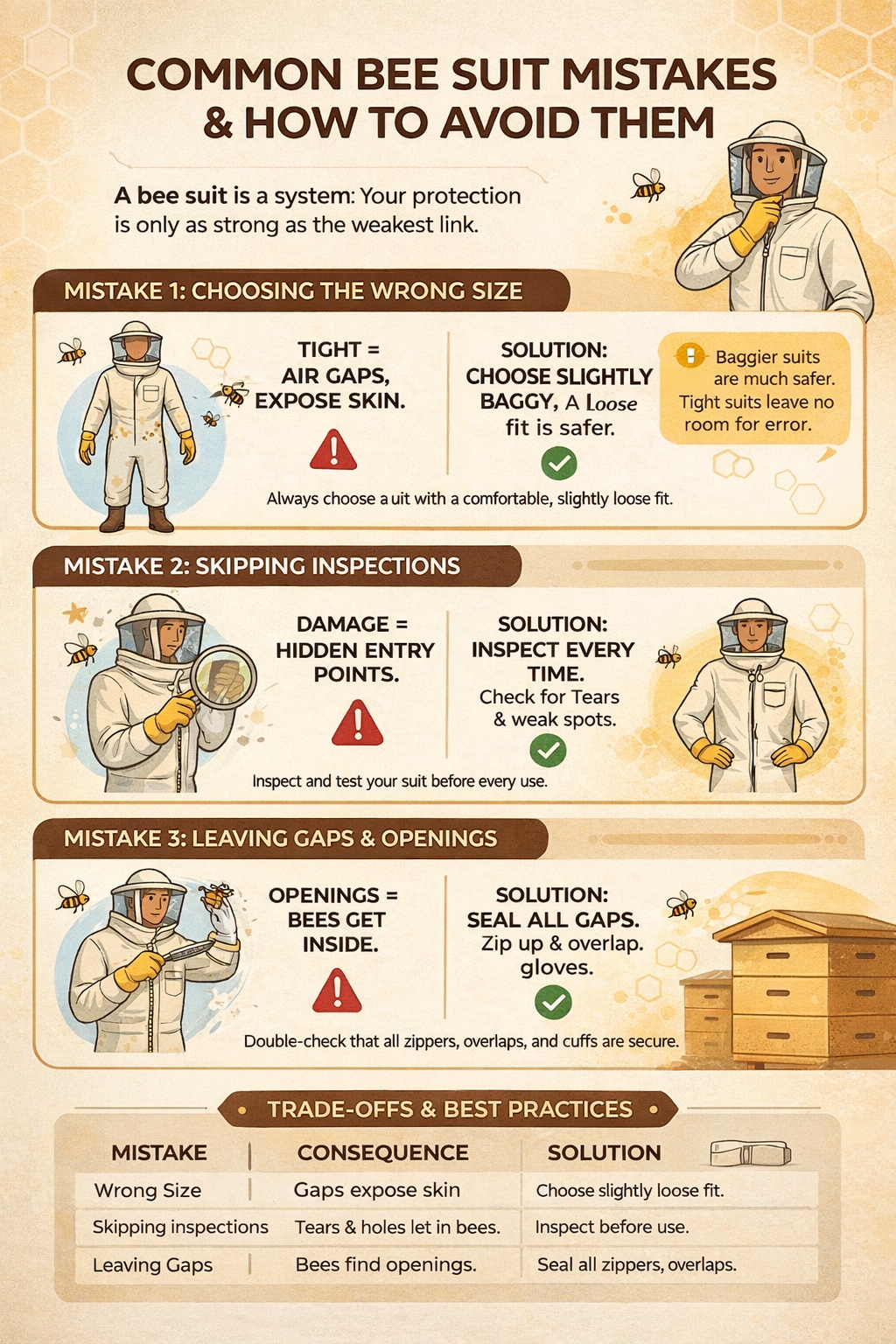
The most common bee suit mistakes include choosing a size that is too tight, failing to secure zippers and closures properly, and skipping pre-use inspections. These small oversights create vulnerabilities that can lead to painful stings and reduced protection.
A bee suit is not just clothing — it is a complete protective system. Its effectiveness depends on eliminating weak points. Even a small gap, loose seam, or tightly stretched fabric can significantly reduce protection.
Understanding these mistakes can greatly improve your safety and confidence in the apiary.
Think of your bee suit as a sealed environment. It works only when every component functions together properly.
If a single bee enters the suit, it may release alarm pheromones. As a result, other bees can be attracted to the same area. What begins as a small breach can quickly escalate into multiple stings.
Therefore, your goal before every hive visit should be to eliminate all possible entry points. Treat your protective clothing like safety equipment — not casual workwear.
Every zipper, seam, cuff, and mesh panel plays a critical role.
A tight bee suit dramatically reduces protection.
When fabric stretches tightly across the skin, the protective air gap disappears. Bees do not need much distance to sting. If the material presses against your body, the stinger can reach your skin more easily.
Unfortunately, this is one of the most common beginner mistakes.
Instead, choose a suit that fits loosely or slightly baggy. The space between your body and the fabric acts as an additional safety layer.
Even if a bee attempts to sting through the material, the extra distance reduces the likelihood of contact.
Always remember: comfort should never compromise safety.
Never assume your suit is ready without checking it first.
Before each hive inspection, take a moment to examine your gear. Over time, washing, sunlight exposure, and repeated use can weaken seams and mesh panels.
Even a tiny tear in the veil can allow a bee to enter near your face. That small damage can quickly turn into a serious safety risk.
Fortunately, inspections take less than two minutes. Making this a routine habit can prevent painful mistakes.
Bees are highly skilled at locating entry points.
In most cases, bees do not enter through torn fabric. Instead, they find unsecured closures or small gaps between gear components.
Always secure every zipper fully. Double-check that Velcro flaps are sealed tightly. Gloves must overlap sleeves, and boots should cover pant legs completely.
These connection points are often the weakest part of your protective system.
Choosing a bee suit requires balancing protection with comfort. When you understand this balance, you make better safety decisions.
A thick, loose suit offers maximum protection. However, it may feel warmer in hot climates.
On the other hand, a ventilated suit improves airflow. While it increases comfort, it may provide slightly less sting resistance compared to heavy materials.
Still, never choose tightness for comfort. A tight ventilated suit is less protective than a properly fitted loose suit.
The goal is breathable protection without sacrificing space between fabric and skin.
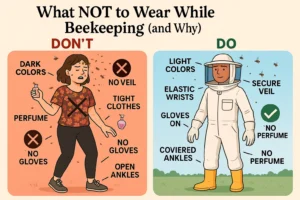
Most bee suits are white or light-colored for a reason. Dark colors may resemble predators such as bears, which can trigger defensive behavior in bees.
Light-colored clothing promotes a calmer working environment. Additionally, avoid wearing dark garments underneath ventilated suits if they are visible through the mesh.
Small details often influence bee behavior more than many beekeepers realize.
Before approaching a hive, run through this simple checklist:
If your priority is maximum safety, choose a slightly oversized suit and seal all overlap points carefully.
If your priority is efficiency, make inspections part of your routine.
If your goal is keeping bees calm, stick to light-colored clothing and avoid strong scents.
Preparation and consistency build real confidence in beekeeping.
| Common Mistake | Consequence | Prevention Tip |
| Wrong Fit (Too Tight) | Fabric pressed against skin, increasing sting risk | Choose a loose-fitting suit to create a protective air gap |
| Neglecting Pre-Use Inspection | Hidden holes or tears allow bee entry | Inspect seams, stress areas, and veil mesh before each use |
| Leaving Gaps & Openings | Bees exploit unsecured closures | Fully seal zippers, Velcro, and ensure glove/boot overlap |
Bee suits are typically made from cotton, poly-cotton blends, or multi-layer ventilated mesh fabrics. Cotton provides durability, while ventilated suits improve airflow and reduce heat buildup.
Wear the suit loosely, secure all zippers completely, overlap gloves and boots properly, and inspect seams and veil mesh before every use.
Wrists, ankles, neck, and face are most vulnerable because they are common connection points in protective clothing.
A jacket provides upper-body protection with greater mobility. However, it must be paired with gloves and proper lower-body coverage.
A full suit offers maximum protection and reduced sting risk. The main drawback is potential heat retention in warm climates.
Protective clothing helps beekeepers stay calm and focused. Calm movements reduce defensive reactions from bees.
Loose-fitting, breathable, light-colored clothing is best. Avoid dark fabrics and strong scents.
Professional suits minimize entry points, reinforce stress areas, and include secure closures. Quality construction significantly reduces sting risk.
Bee suit safety depends on preparation and proper use. A loose fit, secure closures, and consistent inspections dramatically reduce sting risks.
Small mistakes can create big problems. However, disciplined habits keep you protected.
Choosing well-constructed protective gear — such as thoughtfully designed suits from goldenhivegears — supports long-term safety, confidence, and productivity in the apiary.