Bee Suit Protection: How Modern Beekeeping Gear Reduces Sting Risk
Healthy colonies begin long before bees enter the hive — they begin in the landscape. At goldenhivegears, we emphasize that successful beekeeping depends not only on hive management but also on forage availability. Nectar fuels honey production. Pollen provides protein for brood development. Without a steady supply of both, even the strongest colony will struggle.
Whether you manage one hive or several, planting strategic, nectar-rich blooms creates a sustainable ecosystem that supports productivity, resilience, and long-term colony health. Properly selected flowers improve honey yield, colony strength, and overall bee activity.
Let’s break down how to choose the right plants for your hives, why they matter, and how to plan forage throughout the year.
Not every colorful bloom benefits honeybees. Productive forage plants typically share these characteristics:
Avoid heavily hybridized ornamental varieties that may look attractive but provide little nutritional value. Designing forage intentionally transforms your property into a high-performance pollinator environment.
These plants significantly strengthen colonies by supporting brood rearing and honey flow.
Large seed heads contain substantial pollen.
Advantages: Excellent protein source; visually impactful.
Important: Choose traditional pollen-producing varieties, not sterile hybrids.
Often called a “bee magnet,” borage flowers replenish nectar rapidly.
Advantages: Continuous nectar production; fast growth cycle.
Consideration: Can self-seed aggressively.
A classic pollinator plant offering sustained summer blooms.
Advantages: Provides nectar and pollen; drought tolerant once established.
Consideration: Requires full sun and well-drained soil.
Tall purple flower spikes attract heavy foraging activity.
Advantages: High nectar yield; excellent for pollinator gardens.
Consideration: Manage reseeding in compact spaces.
These flowers are easy to cultivate and provide reliable forage.
Central disk florets make nectar accessible.
Strengths: Hardy perennial; long bloom period.
Watch For: Susceptibility to mildew in humid climates.
Light blooms that bees readily visit.
Strengths: Long flowering window; easy from seed.
Watch For: Some hybrid strains lack durability.
Reliable summer bloomers.
Strengths: Continuous flowering; wide color range.
Watch For: Ensure airflow to prevent mildew.
Only open-centered varieties benefit bees.
Strengths: Strong visual appeal with nectar access.
Avoid: Double-petal types that block foraging.
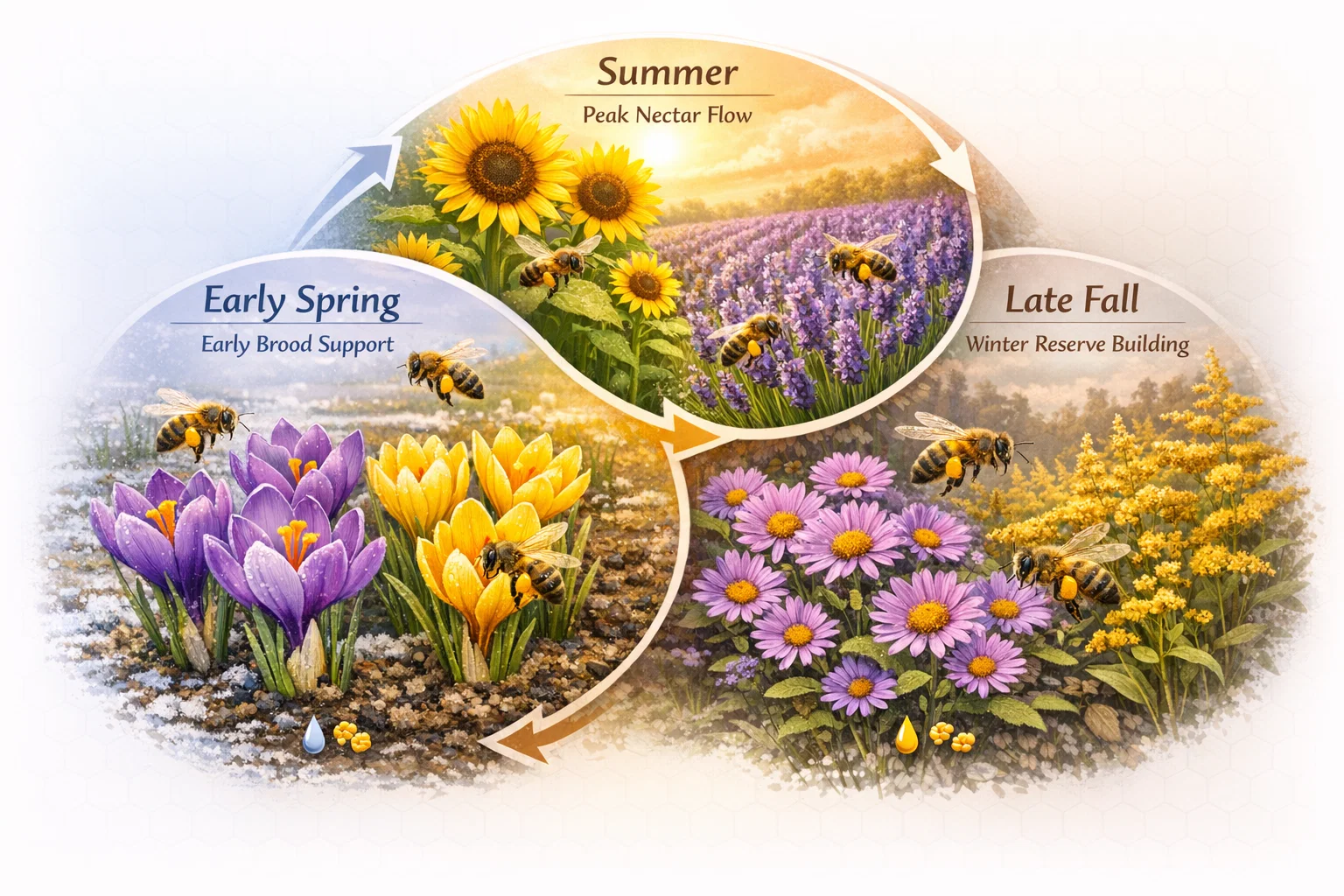
Extending forage availability beyond peak summer is one of the most effective beekeeping strategies.
Provides one of the first nectar and pollen sources after winter.
Benefit: Jump-starts spring brood rearing.
Tip: Plant in clusters.
Blooms during cooler months when resources are scarce.
Benefit: Supports early foragers.
Tip: Prefers acidic, well-drained soil.
Late-season bloomers preparing colonies for winter.
Benefit: Strengthens fall reserves.
Tip: Select mildew-resistant varieties.
Heat-tolerant and long blooming.
Benefit: Extends nectar flow into fall.
Note: Some varieties behave as short-lived perennials.
Your herb garden can meaningfully support hive nutrition:
These herbs benefit both your kitchen and your colony.
For maximum impact:
A diversified forage calendar reduces nutritional gaps and stabilizes honey production.
| Season | Recommended Plants | Primary Benefit |
| Early Spring | Crocus, Winter Heath | Jump-start colony growth |
| Spring | Lavender, Borage | Supports brood expansion |
| Summer | Sunflowers, Cosmos, Bee Balm, Zinnias | Peak nectar flow |
| Late Summer/Fall | Asters, Blanketflower, Goldenrod | Builds winter reserves |
Year-round planning directly correlates with hive resilience.
Stronger forage means increased hive activity. As colonies grow more productive, beekeeper protection becomes essential.
At Golden Hive Gears, we design professional protective apparel engineered for:
Reliable equipment allows you to work confidently while maintaining colony stability.
Bee health depends on a balance of nectar carbohydrates and pollen proteins.
| Flower | Nectar (Carbs) | Pollen (Protein) | Bloom Duration |
| Sunflower | Moderate | High (20–35%) | Summer |
| Lavender | High | Moderate (15–20%) | Summer |
| Clover | Moderate | High (22–30%) | Spring–Summer |
| Borage | Very High | Moderate (18–22%) | Summer |
High-protein pollen supports larval development. High-nectar plants fuel worker bees’ energy-intensive tasks such as foraging and hive ventilation.
Avoid these errors to maximize forage value:
During inspections in high-forage environments, using proper beekeeping Accessories helps maintain safe and efficient hive management.
Planting clover, lavender, and borage increased honey yield from 20 lbs to 60 lbs per hive in one season.
Integrating sunflowers and goldenrod improved pollen availability and increased brood survival by 30%. Large-scale operations often rely on dependable Wholesale suppliers for consistent protective equipment and operational support.
Drought-resistant plants such as thyme, oregano, and lavender provided stable forage year-round despite dry conditions.
| Month | Key Blooms | Estimated Pollen Yield/Hive | Notes |
| March | Crocus, Early Clover | 1 kg | Early brood support |
| April | Fruit Trees, Lavender | 2 kg | Peak nectar flow |
| May | Borage, Sunflowers | 3 kg | Continuous bloom |
| June | Cosmos, Zinnias | 2.5 kg | Heat-tolerant forage |
| July | Bee Balm, Goldenrod | 3 kg | Pollen supplement |
| August | Sunflowers, Asters | 2 kg | Summer extension |
| September | Blanketflower, Lavender | 1.5 kg | Late-season nectar |
| October | Asters, Winter Heath | 1 kg | Fall brood preparation |
Q1: Can I grow bee plants in a small urban backyard?
Yes. Container planting with lavender, borage, thyme, or sunflowers provides effective forage.
Q2: What are drought-tolerant bee plants?
Lavender, blanketflower, thyme, rosemary, and sunflowers perform well with minimal watering.
Q3: How can I extend forage into early spring?
Plant crocus, early clover, and fruit blossoms.
Q4: Can native plants outperform non-natives?
Often yes, due to climate adaptation.
Q5: Which plants support both nectar and pollen needs?
Sunflower, borage, and lavender provide balanced nutrition.
Q6: How can I prevent pests while planting?
Avoid chemical pesticides and maintain soil health.
Golden Hive Gears is dedicated to equipping modern beekeepers with reliable protective clothing and practical guidance. Our mission is to support sustainable beekeeping practices that strengthen colonies and empower beekeepers at every level.
When you combine proper hive management, strategic planting, dependable protective gear, and informed planning, you create an environment where both bees and beekeepers thrive.