Bee Suit Protection: How Modern Beekeeping Gear Reduces Sting Risk

Honey is often viewed as a simple natural sweetener — something we drizzle into tea or spread on toast. But inside a beehive, honey is far more than a treat. It is the colony’s primary energy reserve, a survival system built by thousands of highly organized worker bees.
At goldenhivegears, we believe that understanding how honey is made deepens respect for both bees and responsible beekeeping. The journey from floral nectar to thick, shelf-stable honey is a precise biological and cooperative process that unfolds in structured stages.
Let’s examine exactly how it happens.
Technically, honey is a concentrated carbohydrate solution produced by honeybees from plant nectar through enzymatic transformation and controlled dehydration.
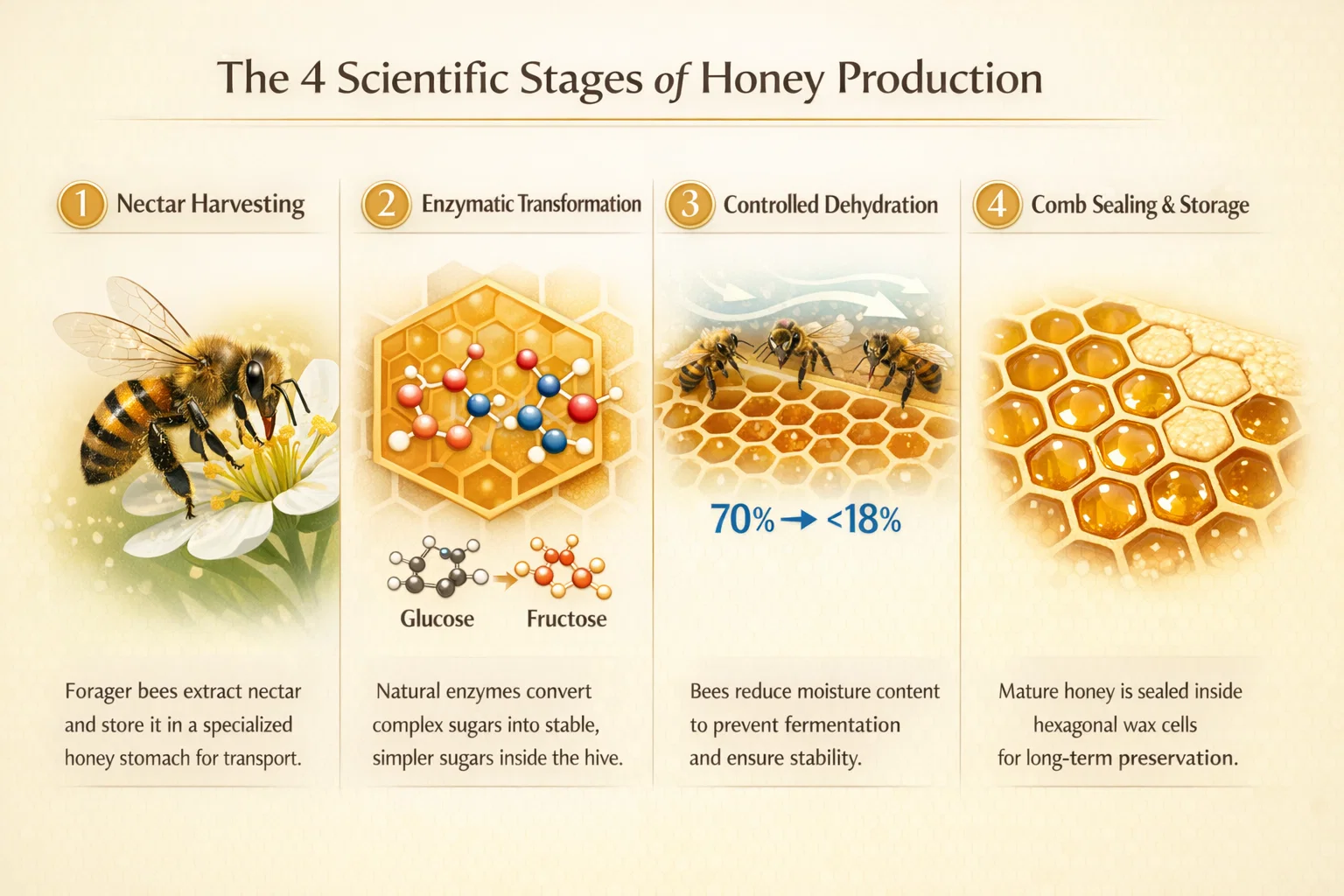
The process unfolds in four primary phases:
Nectar Foraging – Bees collect nectar from flowers and store it in a specialized organ.
Enzymatic Breakdown – Natural enzymes convert complex sugars into simpler ones.
Water Evaporation – Excess moisture is removed to prevent fermentation.
Comb Storage & Sealing – Mature honey is deposited in wax cells and capped.
The result is a stable, antibacterial food supply capable of lasting indefinitely under proper conditions.
Honey production is possible because the hive operates as a coordinated biological system.
The queen’s primary role is reproduction. By laying up to 2,000 eggs per day during peak season, she ensures a continuous labor force. Although she does not participate in nectar collection, colony strength depends on her productivity.
Female worker bees perform nearly every operational task in the hive. During their lifespan (approximately six weeks in summer), they progress through multiple roles:
Honey production is largely driven by these workers.
Older worker bees transition into foragers. They may travel several miles in search of nectar-rich blossoms, visiting hundreds of flowers per trip.
Male bees exist primarily for mating with a queen from another colony. They do not assist in honey production.
This specialization ensures efficiency and rapid nectar processing.
Honey production begins outdoors.
Bees are attracted to high-nectar flowers, especially those with vivid coloration and strong scent signals. Common nectar sources include clover, lavender, sunflowers, wildflowers, buckwheat, and acacia.
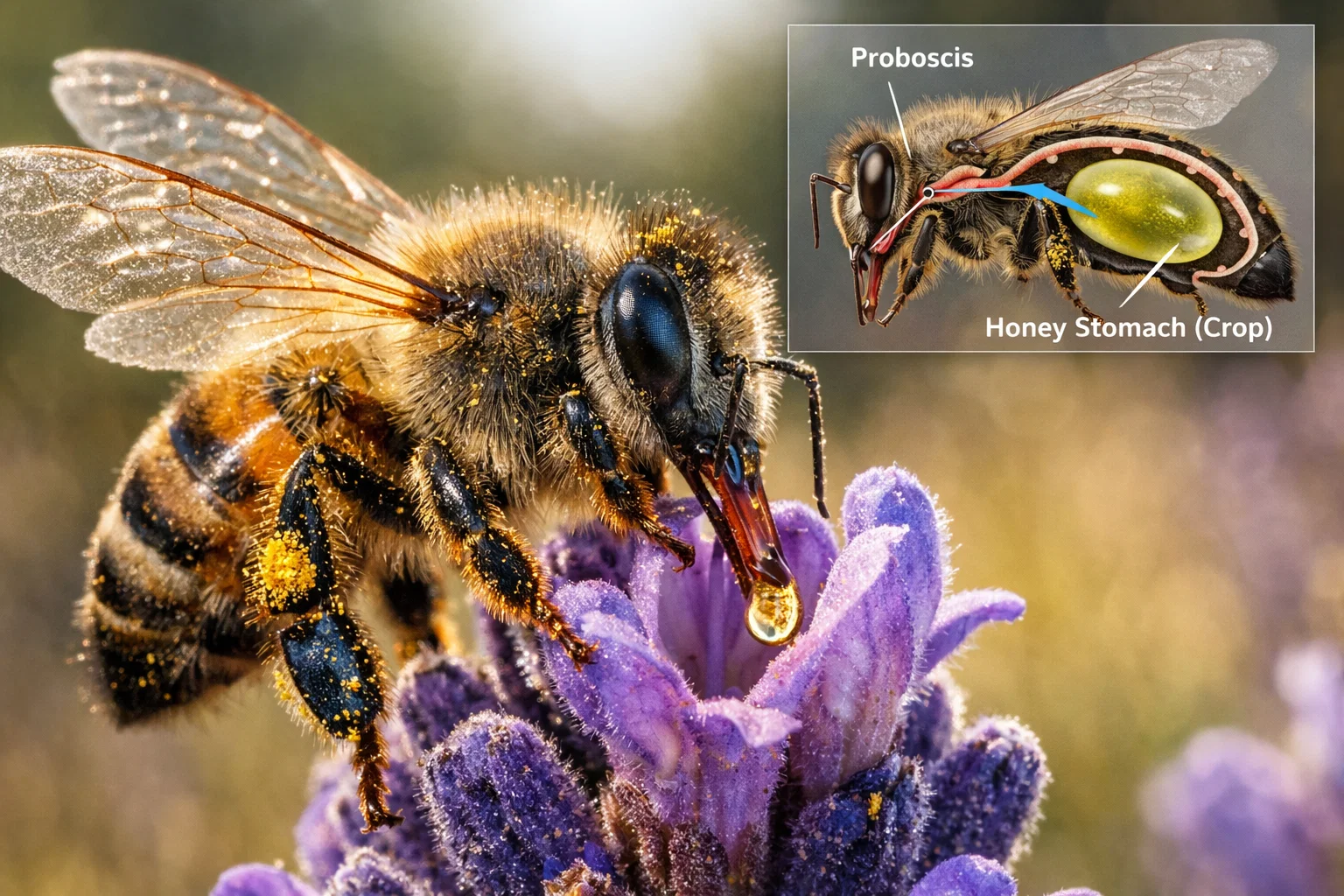
Using a long, tube-like tongue (proboscis), a bee draws nectar from deep within the flower. Nectar is primarily water (about 70–80%) combined with sucrose and trace nutrients.
Instead of digesting the nectar, the bee stores it in a separate organ called the honey stomach (or crop). This allows transport back to the hive without metabolizing the sugars.
Upon returning, the bee performs a directional movement pattern known as the waggle dance. This behavior communicates both distance and direction of productive flower patches to other foragers.
The floral source ultimately determines honey’s color, flavor profile, and aroma.
Back inside the hive, nectar undergoes biochemical modification.
Foragers pass nectar to house bees through mouth-to-mouth exchange. This repeated transfer begins enzymatic processing.
These enzymatic reactions increase stability and reduce susceptibility to spoilage.
Fresh nectar contains too much water to store safely. If left unchanged, it would ferment.
To prevent this:
Once sufficiently dehydrated, nectar becomes true honey — thick, concentrated, and shelf-stable.
Worker bees secrete wax from abdominal glands and shape it into hexagonal cells. The hexagon is geometrically efficient, maximizing storage while minimizing material use.
When honey reaches optimal consistency, bees seal each cell with a thin wax cap. This airtight barrier protects against moisture and contamination.
Properly sealed honey can remain preserved for years under ideal conditions.
Bees do not produce honey for humans. It is strictly a survival resource.
Without adequate reserves, colonies cannot endure seasonal scarcity.
Bees rely on diverse floral sources to produce honey. Different plants contribute unique flavors, colors, and sugar profiles.
Spring: Early blooms such as dandelions and fruit trees begin nectar collection.
Summer: Peak honey flow from sunflowers, clover, and wildflowers.
Fall: Late bloomers like asters and goldenrod help colonies build reserves.
Sustainable beekeeping encourages pollinator-friendly planting to support consistent forage and healthy colonies.
Understanding nectar processing explains honey production efficiency.
Digestive Path: Proboscis → honey stomach → trophallaxis transfer → comb cell processing.
This coordination ensures safe honey production while preventing fermentation.
To maximize output, beekeepers must balance colony growth, nectar availability, and hive health.
Reduces swarming risk and strengthens colony numbers.
Strong queens maintain consistent brood production and foraging activity.
Varroa mite monitoring is essential. Wax moths and small hive beetles require early detection.
Add supers during nectar flow and adjust ventilation during hot weather.
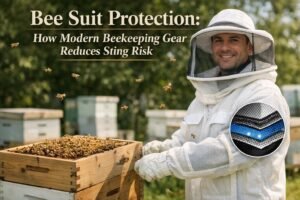
Beekeepers performing inspections or harvests should always wear proper protection such as quality Bee Suits or lightweight Bee Jackets to minimize sting risk and maintain safe hive interaction.
Proper extraction ensures honey quality and prevents colony stress.
Most harvesting equipment falls under essential beekeeping Accessories, helping streamline safe and efficient extraction.
European Hobbyist: Diversified flower planting increased yield to 80 lbs per hive.
US Commercial Apiary: Improved ventilation and pest control boosted worker efficiency by 25%, reducing colony stress. Commercial-scale operations sourcing equipment in volume often rely on dependable Wholesale suppliers to maintain consistency.
Tropical Operation: Adjusted harvest timing prevented wet nectar fermentation, protecting seasonal output.
These examples demonstrate how forage diversity and management decisions directly influence production.
How much honey can one hive produce annually?
Typically 30–60 lbs; strong colonies may exceed this.
Does honey expire?
Pure honey remains stable indefinitely if stored properly.
Is pollen used to make honey?
No; pollen provides protein, nectar becomes honey.
Why does honey crystallize?
Glucose naturally crystallizes; gentle warming restores liquidity.
Are bees harmed during harvesting?
Modern methods allow extraction without harming bees.
Raw vs processed honey — which is better?
Raw retains more enzymes and antioxidants.
Can children safely help with beekeeping?
With supervision and proper protective equipment, yes.
How should beginners continue learning?
Exploring educational resources in our Blogs section provides practical guidance for new and experienced beekeepers alike.
Honey production is an extraordinary example of biological precision and collective coordination. From nectar collection to enzymatic refinement and moisture control, each stage demonstrates the sophistication of honeybee colonies.
Every jar represents millions of flower visits and weeks of structured labor.
At goldenhivegears, we are committed to supporting responsible beekeeping through reliable equipment, educational content, and respect for pollinators. Whether you are just beginning or scaling operations, investing in the right gear and knowledge ensures both colony health and long-term success.