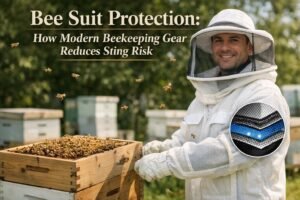
Bee Suit Protection: How Modern Beekeeping Gear Reduces Sting Risk

Beekeeping is a disciplined practice that requires skill, patience, and the right protective equipment. While honey bees are not naturally aggressive, they defend their colonies vigorously when disturbed. For beekeepers, protective clothing—especially a well-designed bee suit—is the primary safeguard against stings.
Modern bee suits have evolved over decades. Today’s suits feature layered fabrics, reinforced seams, breathable mesh systems, and thoughtful design to reduce sting penetration while maintaining comfort. This guide explains how modern bee suits work, evaluates their effectiveness, and helps you choose the right protection based on your environment and experience.
A honey bee’s stinger can penetrate thin fabric in seconds. The severity of a sting depends on:
Most stings cause temporary pain and swelling, but repeated exposure can increase discomfort. Individuals allergic to bee venom need full protection. Modern bee suits reduce risk using physical barriers, spacing systems, and secure enclosures.
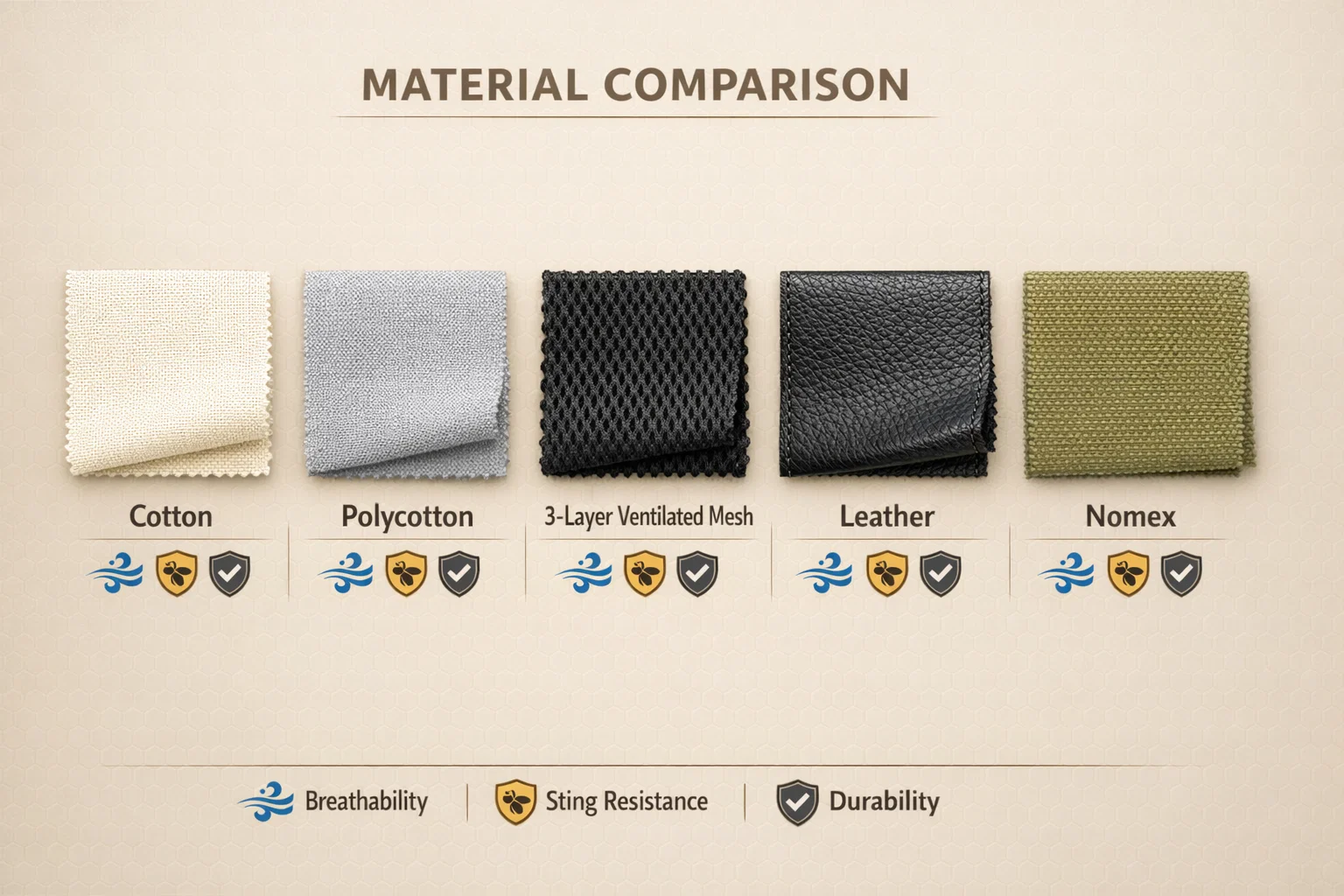
Heavy-duty woven fabrics, like thick cotton or polycotton blends, resist stinger penetration. Higher GSM fabrics provide durability and comfort, reducing sting risk.
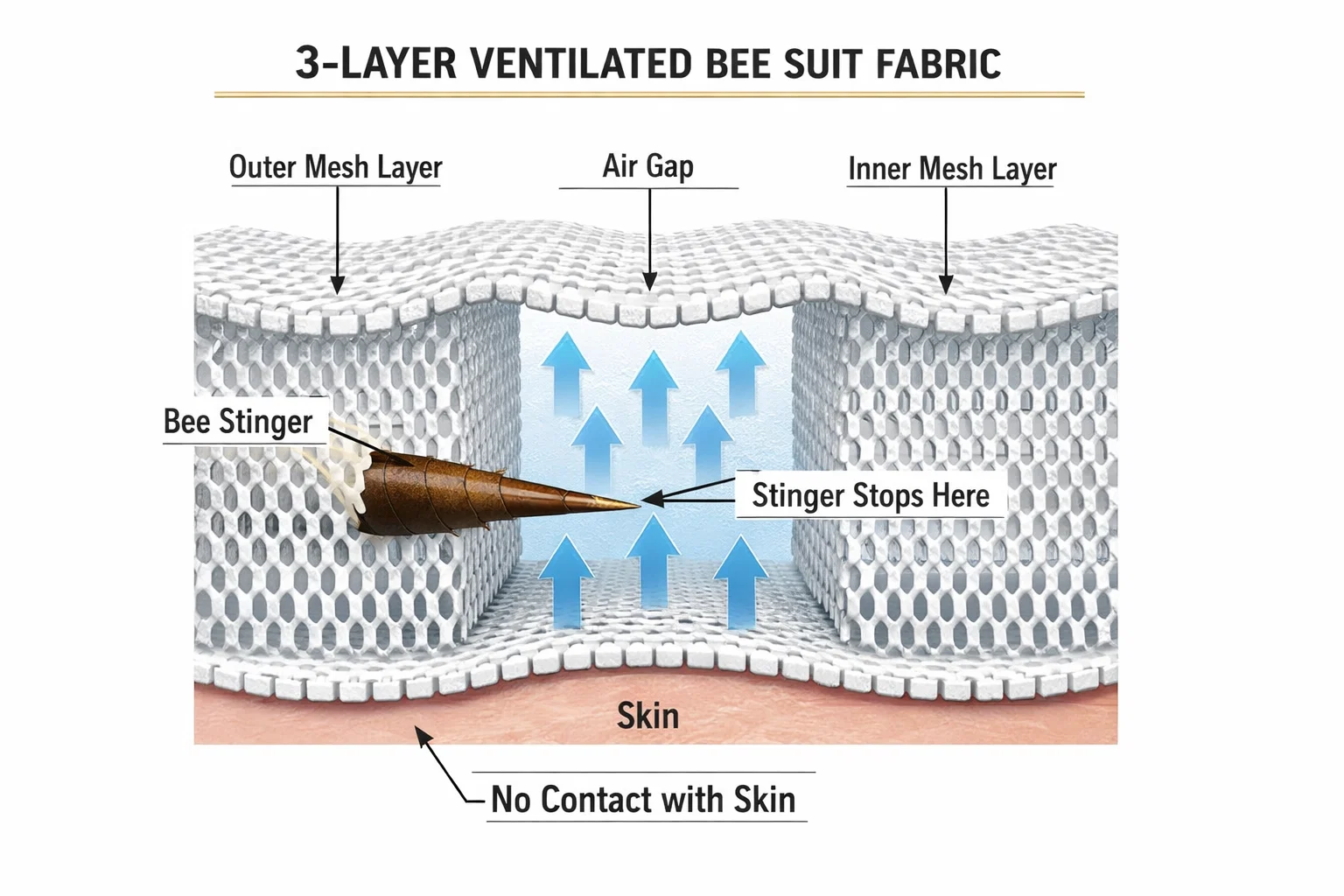
Three-layer ventilated mesh suits create air gaps between outer and inner layers. Even if a stinger penetrates the outer layer, it often cannot reach the skin. Ventilation also improves airflow, reduces heat stress, and calms bees.
Closures are critical for protection:
Most sting incidents occur due to small openings, not fabric failure. Proper sealing and routine inspection are essential.
Field conditions reveal true effectiveness:
Common causes of stings include:
Regular inspection and preventive maintenance often improve safety more than upgrading materials alone.
| Situation | Suit Type | Typical Sting Risk |
| Calm hive, cool weather | Cotton / Polycotton | Low |
| Hot day, extended inspection | 3-Layer Ventilated | Very Low |
| Defensive colony management | Reinforced Mesh / Leather | Low–Moderate |
Light colors, especially white, are standard because bees react aggressively to dark shades. Benefits:
Pair light-colored suits with gloves and veils for full protection.
Choosing gear suited to your climate improves comfort and safety.
Modern suits are not absolute barriers. Limitations include:
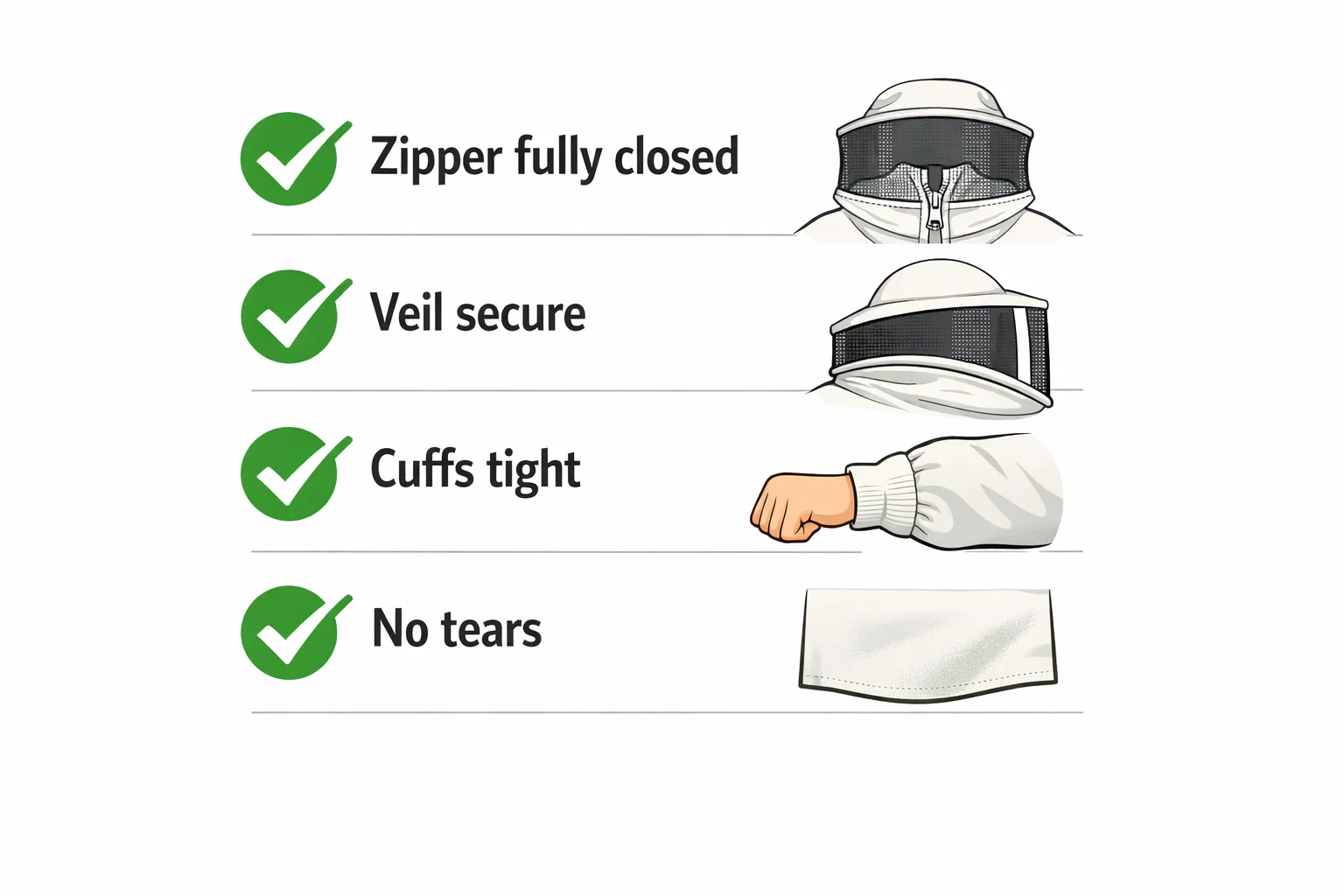
Before inspections, perform a quick safety check:
| Beekeeper Profile | Recommended Protection |
| Beginner | Full 3-Layer Ventilated Suit |
| Hobbyist (Cool Region) | Cotton / Polycotton |
| Warm Climate Operator | 3-Layer Ventilated |
| Commercial Beekeeper | Ventilated + Reinforced Option |
| Managing Defensive Colonies | Leather or Reinforced Mesh |
| Allergy-Sensitive | Maximum Coverage Ventilated |
Can bees sting through a modern bee suit?
Rarely. Thin, worn, or compressed fabric may allow penetration. Multi-layer ventilated suits minimize risk.
How long does a bee suit last?
Hobbyist suits last several seasons; commercial use may shorten lifespan to 1–2 years.
Is a jacket sufficient?
No. Jackets leave legs exposed. Full suits provide complete coverage.
Do protective suits eliminate the need for a smoker?
No. Smokers calm bees; protective gear reduces sting impact. Both are recommended.
Which suit is best for hot climates?
3-layer ventilated mesh provides airflow, reduces heat stress, and lowers bee defensiveness.
Bee suit protection combines smart design, durable materials, and proper use. Modern suits reduce sting risk with fabric density, ventilation, secure closures, and full coverage.
Success depends on:
Beginners and allergy-sensitive beekeepers benefit most from full ventilated suits. Commercial operators may rotate between ventilated and reinforced suits, while cotton or polycotton suits may suffice in cooler climates.
Well-engineered protective gear, like those from Golden Hive Gears, balances durability, airflow, and sting resistance—allowing beekeepers to work confidently and safely.